
If you’ve got a toddler and you’re staring down another gray New Jersey afternoon, you’ve probably typed some version of “indoor playground near me” into Google and then hesitated before clicking anything.
I get it. I’m not just the owner of Space Play Academy — I’m a dad who was once standing in a crowded play space with my own toddler, watching a pack of eight-year-olds barrel past her, thinking there has to be a better way to do this.
That thought is the actual reason SPA exists. So instead of writing you a sales pitch, I want to answer the question honestly: is an indoor playground actually a good fit for a toddler, and what should you be looking for — whether you end up at our place or somewhere else?
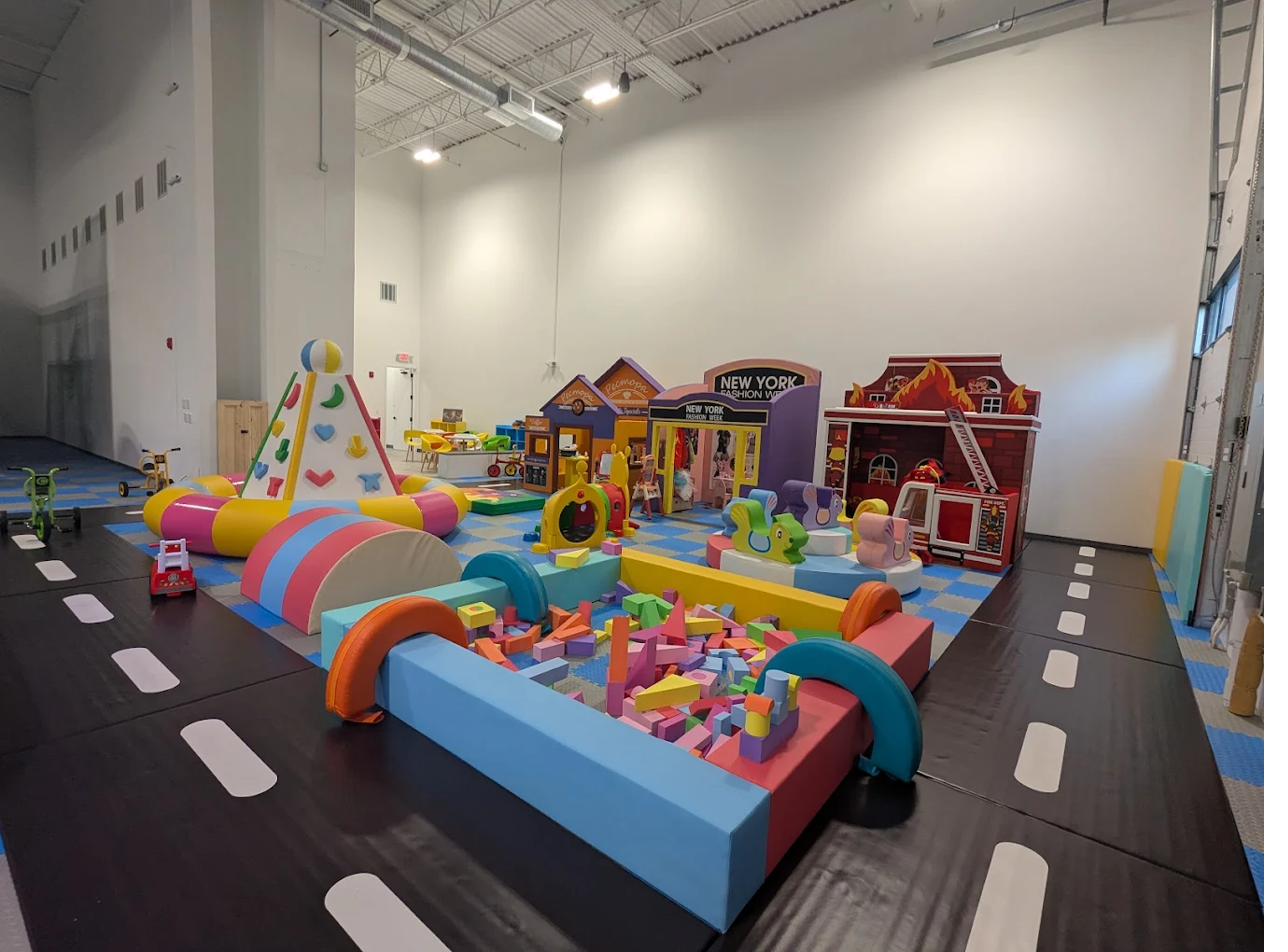
The developmental case for indoor play (not just “burning energy”)
It’s easy to think of an indoor playground as glorified babysitting for a rainy afternoon, but there’s real developmental value packed into unstructured play at this age:
- Gross motor skills — climbing, crawling through tunnels, and balancing build coordination that toddlers need well before they can express it in words.
- Sensory regulation — textured surfaces, ball pits, and varied movement help toddlers process sensory input, which is a big part of why we lean into themed, tactile environments rather than just slides and ladders.
- Early social skills — parallel play (kids playing near each other rather than directly together) is completely normal at this age, and a toddler-scaled space gives them room to practice it without getting overwhelmed by older kids’ games.
- Confidence through repetition — toddlers often want to do the same climb or slide over and over. A safe, contained space lets them repeat and master a skill instead of getting swept along by faster kids.
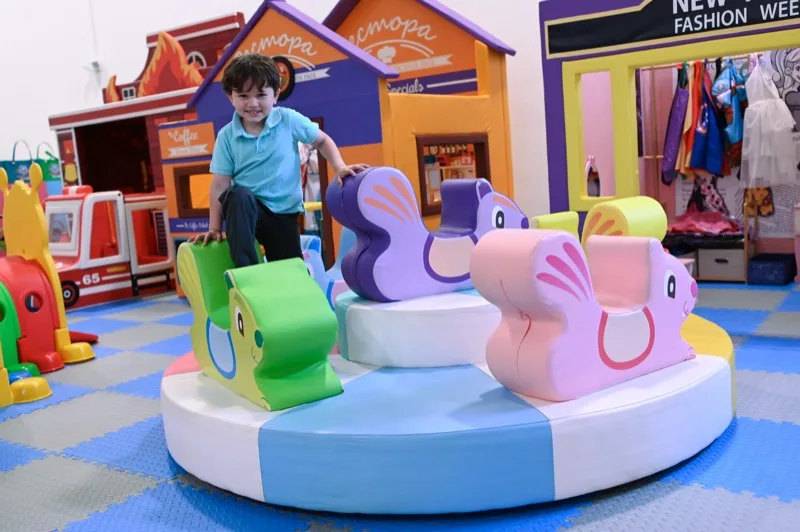
The real worry: will my toddler get run over?
This is the question underneath almost every other question.
Toddlers move differently than older kids — slower, less predictable, still figuring out depth and balance — and a lot of indoor playgrounds are built as one big open structure for ages 1 to 12. That’s great for a nine-year-old. It’s genuinely stressful for a parent trying to keep an 18-month-old upright in the same space.
So the first thing to look for isn’t the toy selection or the birthday packages. It’s zoning. A venue built with a dedicated toddler area — separated by walls, low barriers, or at minimum a clearly defined footprint — means your child gets a scaled-down environment where the equipment, the traffic, and the noise level match what a toddler can actually handle.
When we laid out SPA’s zones, this was the first decision we made, before we picked a single theme or color scheme: toddlers and school-age kids needed physically separate territory, not just a sign asking big kids to be gentle.
What to actually check before you go (with or without us)
If you’re evaluating any indoor playground for a toddler, here’s what I’d genuinely look at, in order:
- Age-specific zones. Is there a space actually scaled for walkers and early walkers, or is it one structure for everyone?
- Surfaces and heights. Padded flooring, low platforms, and soft-edged equipment matter far more at this age than climbing walls or big slides.
- Supervision ratio and staff visibility. Are staff actually positioned to see the toddler area, or is it self-serve?
- Cleaning routine. Ask directly — daily sanitizing, sock requirements, how often soft-play surfaces get wiped down. Toddlers put everything in their mouths; this isn’t a small detail.
- Noise and lighting. Some venues are genuinely overwhelming — echoing arcade noise, flashing lights. A calmer sensory environment goes a long way for a two-year-old’s nervous system.
- Space to just sit. You’ll be on the floor a lot at this age. Somewhere to actually watch comfortably matters more than people expect.
- Time of day. If your toddler gets overwhelmed by bigger kids, go on a weekday morning. Once school-age kids are in class, the space naturally skews younger and calmer — it’s the easiest way to get a toddler-paced visit without needing a toddler-only event.
None of this is unique to us — it’s just what I’d tell a friend to check before booking anywhere.
How we built SPA’s zones around this
Space Play Academy is a space-themed indoor playground, and when we designed it, the toddler area wasn’t an afterthought bolted onto a bigger structure. Little Dippers is its own zone, scaled to smaller bodies, with softer equipment and lower everything. Staff are positioned with sightlines into it specifically, and it’s set apart from the zones where our older kids are running full-speed through more physical play. You can see how the zones are laid out, and which ages each one is built for, on our play zones page.
Parents get a spot to actually sit rather than crouch-walking the whole visit.
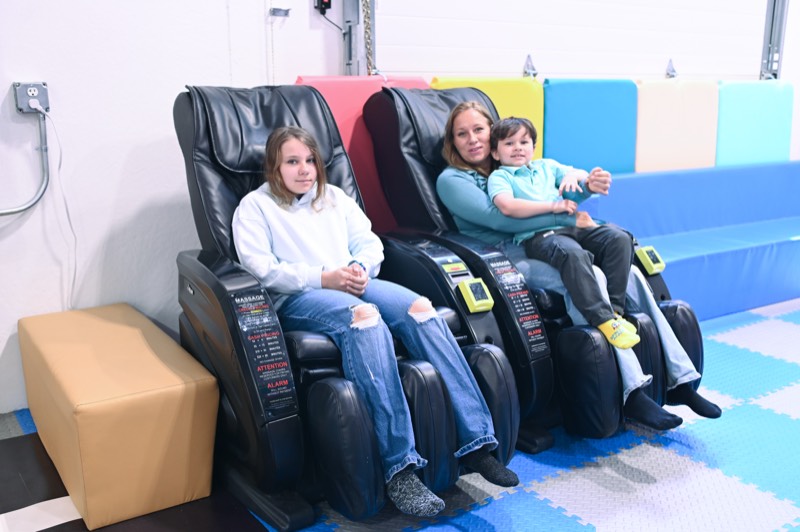
I won’t pretend every venue needs to look like ours — but I do think any parent evaluating an indoor playground for a toddler should be able to answer “where exactly does my child fit into this layout” before they book.
If you’re weighing options around Central Jersey generally, we keep a running list of toddler-friendly activities in Central NJ that includes plenty of places that aren’t us.
Space Play Academy is a space-themed indoor playground in Hillsborough, NJ, built with dedicated zones for toddlers through age 12. Learn more about our toddler area and open play hours →